Professor Lakshman Samaranayake Research Excellence Award 2025
University of Peradeniya
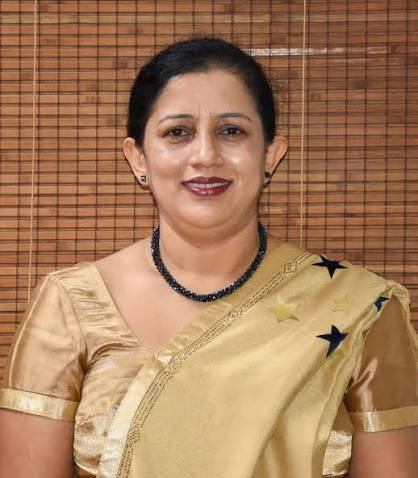
Sakunthala Yatigammana
Professor in Education
University of Peradeniya · Sri Lanka
Professor in Education; Head, Department of Information Technology
Faculty of Arts, University of Peradeniya
Sakunthala Yatigammana Ekanayake is Professor in Education at the Department of Education, Faculty of Arts, University of Peradeniya, where she also serves as Head of the Department of Information Technology.
Her scholarship sits at the intersection of educational technology, science and STEM/STEAM education, research methods, assessment, and comparative and international education. She began teaching in 1994, graduated in Biosciences from the University of Peradeniya in 1996, and completed her PhD at the University of Bristol in 2011 with a thesis on how mobile phones can support science teachers in Sri Lanka.
Her recent work turns to generative AI in schools, inclusive higher education and the digital transformation of Asian universities. She has coordinated the Master of Education programme since 2011, teaches and supervises across B.Ed, PG Diploma, M.Sc, M.Ed, MPhil and PhD levels, and serves the field as Vice President of the Indian Ocean Comparative Education Society and as a member of the editorial committee of Global Comparative Education.
Research excellence recognised at institutional, national and international levels.
University of Peradeniya
Awarded by the University of Peradeniya under the Transparent Research Performance Scheme introduced by the University Grants Commission (UGC), Sri Lanka
University of Bristol, United Kingdom
Gothenburg, Sweden · 14–18 June 2012
University of Peradeniya
Also: medals in inter-college and inter-house games at the Siyana College of Education — Table Tennis (silver, 1992), Netball (gold, 1992) and Shot put (silver, 1991).
From doctoral work on mobile phones in Sri Lankan science classrooms to AI, inclusion and the digital transformation of higher education.
A sustained programme on technology-enhanced pedagogy — from her PhD on mobile phones supporting science teachers to studies of undergraduate readiness for mobile learning and ICT in group work.
A guarded generative-AI teaching assistant for upper-secondary schools, AI-augmented STEM resources, and AI-awareness programmes for probationary lecturers.
Teacher readiness and classroom integration of STEM and STEAM in Sri Lankan junior secondary schools, grounded in a background in science and chemistry education.
Inclusive higher education for students with disabilities (IncEdu), sport and physical education for inclusion (SPIRIT), and gender-disaggregated learning outcomes.
Collaborative action research in mathematics and bilingual classrooms, and professional-development workshops for school teachers, lecturers and principals.
Sustainability in learning and teaching, educational leadership in times of crisis, and post-pandemic education in South Asia.
University Research Council (URC), University of Peradeniya — Multidisciplinary Research Grant No. 68_MRG_2026
This multidisciplinary study investigates gastrointestinal parasitic infections among tea plantation workers in Sri Lanka, examining their public-health implications and effects on workers’ health and productivity. As reflected in the project title, the research combines parasitological, geospatial, sociological and education-based perspectives to support a more integrated understanding of the problem.
University Research Council (URC), University of Peradeniya
This multidisciplinary project proposes the design, implementation and evaluation of a guarded generative AI “Teacher Co-pilot” to support Sri Lankan upper-secondary teachers with lesson structuring, anticipating student misconceptions and preparing formative assessments. Using mixed-methods Design-Based Implementation Research and a quasi-experimental comparison across 10–15 schools, the study will examine teacher workload, instructional quality, student engagement and academic performance, including gender-disaggregated outcomes. The design emphasises curriculum alignment, privacy-preserving practices, content guardrails and teacher oversight. Expected outputs include a tested minimum viable product, an impact report, an open-access practitioner guidebook, reusable evaluation instruments and recommendations for responsible scaling.
University of Peradeniya
This teacher-centred, collaborative action-research project aims to co-design, implement and evaluate culturally and linguistically relevant digital and AI-assisted STEM learning resources for Grades 6–13. It plans to recruit 25–30 STEM teachers and collect baseline data from approximately 500–600 students, provide three half-day co-design workshops, develop and pilot learning modules, and evaluate changes in teachers’ technological pedagogical content knowledge (TPACK), self-efficacy and students’ engagement and conceptual learning. A convergent mixed-methods approach combines surveys, assessments, focus groups, observations and reflective diaries. Expected outputs include 15–20 open-access learning modules, a validated LADDER co-design framework and toolkit, 2–3 peer-reviewed journal articles, a project report and a policy brief.
Erasmus, EU
The DIGITAsia project aims to advance Education 5.0 in Asian higher education by leveraging digital technologies, innovative pedagogies, and learner-centered approaches. It seeks to upskill 150 educators with training in hybrid learning, data-driven analytics, and emerging technologies, while piloting at least 130 redesigned courses involving over 1,000 students. The project will create a digital teaching transformation framework and toolkit, ensuring sustainable institutional change. Through peer-to-peer collaboration, dissemination events, and regional partnerships, DIGITAsia promotes inclusivity, personalization, and resilience, fostering a future-ready higher education ecosystem across Sri Lanka, Maldives, and Malaysia.
University of Peradeniya
This project has three main objectives, namely, to explore the teachers’ readiness for the integration of STEM into the existing Junior secondary curricula; to raise awareness among teachers on different pedagogical approaches for STEM integration into teaching and learning in junior secondary classes; to design and implement STEM-integrated lessons for core subjects in junior secondary level and to review teachers’ experience in implementing STEM education at the junior secondary level. The mixed methods approach is the research methodology of this research.
International Development Research Centre, Canada
This project has threefold main objectives namely, the development and use of artificial intelligence (AI) techniques to detect, model, and predict the behaviour of ‘identified diverse groups’ under COVID-19 pandemic containment strategies; understanding of the impact of these strategies initiated in the Global South with special emphasis on Sri Lanka and Malaysia; and the development of AI-based solutions, to predict and manage a future spread of COVID or similar infectious disease outbreaks. Based on generated behaviour and movements, it is proposed to develop AIs to conduct contact tracing and socio-economic impact mitigation actions in a more informed, socially conscious and responsible manner in the case of the next wave of COVID-19 infections or a different future infectious disease. In order to face these future endeavours, it is proposed to transform the AI-informed policy into a set of recommendations that policymakers and medical practitioners can access without any barrier.
Erasmus, EU
IncEdu aims is to develop a system of support to equalize the opportunities for students with disabilities in Sri Lankan Universities and therefore works towards ensuring the rights of students with disabilities to access higher education. IncEdu has four main objectives namely (a) to create community awareness, (b) to develop competency of staff of the partner universities in Sri Lanka, (c) to establish conducive learning environment for students with disabilities, and (d) to make policy recommendations. (esn.ac.lk)
Erasmus, EU
SPIRIT is to create a modular program in Sport, Physical Education and Health Sciences in 3 countries of Asia (Sri Lanka, India and Indonesia) that contributes to increasing the recognition of the fundamental value of sport and physical activity for the individual and society, as well beyond competition, as a powerful tool for the promotion of healthy lifestyles and socioeconomic development - putting special emphasis in vulnerable groups, female and students with special needs.
AHEAD
The key research question that will be addressed in this study is ‘How can we improve the teaching and learning of Mathematics at the junior secondary level of education in Sri Lanka for instilling skills for 21st century among the students?’. The reasons for the existing situation in mathematics education at the provincial level of education are identified and insights for improving teaching and learning through appropriate interventions designed to instill 21st century skills among students in Mathematics classrooms are developed. In order to achieve this an in-depth understanding of the reasons for poor achievements in Mathematics education at the junior secondary level of education in a selected province will be identified, and a positive change in the teaching, learning and assessment practices in the targeted classrooms through a Collaborative Action Research approach is developed.
University of Peradeniya
This study aims to integrate modern technologies into the group work of M.Ed. programme. How modern technologies could be used to enhance the active participation of groups; share materials among groups as well as with the lecturer; collect data such as capturing images, recording interviews, capturing observations as videos and also taking notes while they are in the field; and communicate with their supervisor and receive her/his feedback as will be investigated.
British Council
This collaborative action research study aims to address the issue of lack of partnerships among teacher training institutions, bilingual teachers, ESL teachers, school principals, students and parents in implementing effective bilingual education programmes at school level. The project will focus on bilingual teachers in selected schools located in Kandy Education Zone to identify the problems faced by the teachers and students in the teaching learning process and use the collaborative action research methodology to develop useful strategies to solve those problems.
University of Peradeniya
This report is based on a collaborative action research study to improve the mathematics achievement of Grade 10 students in four schools located in Kandy District. A team of researchers from the University of Peradeniya collaborated with five mathematics teachers in four schools to conduct action research studies in their classrooms over a six months period. The teachers used innovative teaching methods, improved pupil-teacher interactions, and paid attention to individual students in their interventions. Overall achievements of students were improved and the majority of students developed favorable attitudes towards learning mathematics. Teachers also reported that their capacities for identifying and analyzing classroom problems, planning interventions, and reflective thinking had been improved.
University of Peradeniya
This study is aimed to explore the readiness, attitudes and perceptions of undergraduate students towards the use of mobile phones for learning. The sample was 300 undergraduate students from the Faculty of Arts. The research approach is mixed methods. Quantitative and qualitative data were collected by administrating a survey questionnaire and focused group interviews respectively. Data were analysed with the use of SPSS and the thematic analysis technique (with NVivo10 software). According to the findings the majority of the students had already used mobile phones for their learning purposes and they were positive towards the use of mobile phones for teaching and learning in the Faculty.
National Research Council
This project investigated the potential of mobile phones to enhance the effectiveness of science teaching and learning by developing mobile phone based teaching aids and implementing a number of lessons in real classrooms. Three workshops were used to develop the teaching aids and lessons. These workshops enabled to train teaches with pedagogical innovations required to use mobile phones and to assess the effectiveness of the developed lessons and the proposed approach. During the workshops and lesson implementation data was collected as audio, video and field notes and analysed using the Thematic network analysis. Mobile phones on a private network facilitated the learning activities by providing instructions with both visuals and voice and providing means of interactions and feedback. Further, the mobile phones on the private network supported the teacher to monitor the learning activity effectively.
University of Peradeniya
Objectives of this study are to investigate whether the teachers integrate mobile learning activities with the existing pedagogical practices; to assess the attitudes towards the use of mobile phones; and to identify any barriers for widespread use. This study started with a workshop followed by implementation of four lessons and a subsequent reviewing workshop. The methodological approach was qualitative. The data were collected using observations and field notes and were analyzed using thematic analysis techniques with the support of NVivo10 software. It was found that teachers used mobile phones during different stages of a lesson and they had positive attitudes.
None
The methodological approach of this study is mixed methods. First, Sri Lankan teachers’ readiness to use mobile phones in teaching was assessed (in one province of Sri Lanka) using a questionnaire survey of 200 science teachers and follow-up interviews with 15 purposively selected teachers. Then a Continuous Professional Development (CPD) workshop was carried out for 18 teachers, including the interviewees. During the workshop, the teachers developed four science lessons where mobile phones were integrated and these lessons were subsequently implemented in four real classroom settings. Finally, the teachers were brought together for a Review workshop to discuss their views and experience of using mobile phones in science teaching and learning. During the workshops and lesson implementations, (which were used as the main vehicle for data collection for this study) data were collected through observation using audio, video and field notes.
Search the full list or filter by type. Entries are shown newest first.
Yatigammana Ekanayake, T. M. S., & Weerasekera, P. (2025, July 16–18). Empowering educators for inclusive futures: An AI awareness workshop for probationary lecturers. Paper presented at the VI WCCES Symposium, Renewing the social contract for education: Navigating possible futures, Universidade Lusófona, Lisbon, Portugal.
Edirisinghe, V., Yatigammana, S., Gamage, K.A.A., Gunawardhana, N., Seneheweera, L. (2024). Educational Leadership in Times of Crisis: Lessons Learned and the Future of Higher Education in Sri Lanka. In: Rudolph, J., Crawford, J., Sam, CY., Tan, S. (eds) The Palgrave Handbook of Crisis Leadership in Higher Education. Palgrave Macmillan, Cham.
Ilangarathna, G. A., Ramanayake, L., Senarath, N., Ranasinghe, Y., Weligampola, H., Dedunupitiya, W., Thilakasiri, I., Godaliyadda, R., Ekanayake, P., Herath, V., Ekanayake, J., Yatigammana, S., Rathnayake, A., Pinnawala, M., Maheswaran, M., Thilakaratne, G., & Dharmarathne, S. (2024). A dataset on the socioeconomic and behavioural impacts in Sri Lanka through multiple waves of COVID-19. Data in Brief, 53, 110063.
Senarath, N., Dedunupitiya, W., Ilangarathna, G. A., Thilakasiri, I., Samarakoon, B., Ramanayake, L., Godaliyadda, R., Ekanayake, P., Herath, V., Pinnawala, M., Yatigammana, S., Ekanayake, J., Dharmarathne, S., & Tilakaratne, G. (2024). Family income does not necessarily lead to a holistic e-learning experience during COVID-19: A study in Sri Lanka. Humanities and Social Sciences Communications, 11(1), 1–14.
Yatigammana Ekanayake, S. (2024, July 22–26). Modernizing education for the digital age: A feasibility study on integrating STEM into secondary schools in Sri Lanka [Conference presentation]. XVIII World Congress of Comparative Education Societies (WCCES): Fostering Inclusive Ecologies of Knowledge—Education for Equitable and Sustainable Futures, Cornell University, Ithaca, NY, United States.
Manjula Vithanapathirana, Sakunthala Yatigammana Ekanayake, “Rethinking Teacher Preparedness in Post-Pandemic Sri Lanka” in Rethinking Education in the Context of Post- Pandemic South Asia: Challenges and Possibilities (1st ed.). Pradhan, U., Valentin, K., & Gupta, M. (Eds.). Routledge, 2023 pp5-13.
Isuru Thilakasiri, Neranjan Senarath, Wathsala Dedunupitiya, Gayanthi Ilangarathna, Bhagya Samarakoon, Lakshitha Ramanayake, Roshan Godaliyadda, Parakrama Ekanayake, Vijitha Herath, Mallika Pinnawala, Sakunthala Yatigammana, Janaka Ekanayake, Samath Dharmarathne, Ganga Tilakaratne,(2023). Family income does not necessarily lead to a holistic e-learning experience during COVID-19: A study in Sri Lanka.
Bandara, S., and Yatigammana,S., Educational Attainment of Vedda Parents: A Study From Uva Province, Sri Lanka, 2023 International Research Conference of Sri Lanka Technology Campus Colombo, Sri Lanka. 14th -15th December 2023
Samanmala Dorabawila , Anoma Abhayaratne and Sakunthala Yatigammana, Students With Disabilities in Higher Education in Sri Lanka: Challenges, Impediments, and the Way Forward, International Conference on ‘Diversity, Equity and Inclusion in Higher Education’ (RUICHSS 2023) ISSN: 2706-0063 University of Ruhuna
Samanmala Dorabawila, Sakunthala Yatigammana, Anoma Abhayaratne, “Inclusive Education and Sustainable Development: Challenges and Opportunities in Higher Education for Students with Disabilities” in The Wiley Handbook of Sustainability in Higher Education Learning and Teaching.ed Kelum A. A. Gamage, Nanda Gunawardhana, John Wiley & Sons, 2022.pp 377-395.
T. M. Sakunthala Yatigammana Ekanayake (2022) ‘Integration of STEAM into Science Education for Sustainable Development’, The Tri-Annual Publication of the Institute of Chemistry Ceylon, Institute of Chemistry Ceylon
Gamage KAA, Ekanayake SY, Dehideniya SCP. Embedding Sustainability in Learning and Teaching: Lessons Learned and Moving Forward—Approaches in STEM Higher Education Programmes. Education Sciences. 2022; 12(3):225.
G Ilangarathna, H Weligampola, Y Ranasinghe, E Attygalla, R Godaliyaddha, V Herath, P Ekanayake, SY Ekanayake, M Pinnawela, S Dharmaratne, G Tilakaratne and J Ekanayake (2022). ‘Artificial Intelligence framework for threat assessment and containment for COVID-19 and future epidemics while mitigating the socioeconomic impact to women, children, and underprivileged groups’, Meeting Global Challenges: A Transdisciplinary and Transnational Approach, 251.
Gayanthi A Ilangarathna, Yasiru Ranasinghe, Harshana Weligampola, Erandi Attygalla, Janaka Ekanayake, Sakunthala Yatigammana, Mallika Pinnawala, Roshan Godaliyadda, Vijitha Herath, Parakrama Ekanayake, Ganga Thilakaratne, Samath Dharmarathne (2022) ‘A Comprehensive Overview of Education during Three COVID-19 Pandemic Periods: Impact on Engineering Students in Sri Lanka’, Education Sciences, 12 (3). 197
D.M.S.C.P.K.Dehideniya & T.M.S.S.K. Yatigammana Ekanayake Technology Enhanced STEM Integrated Science Education to Develop Humanistic Values and Goals: Reviewing the Literature, Global Comparative Education: Journal of the WCCES 6 (1), 2022
Weligampola, H., Ramanayake, L., Ranasinghe, Y., Ilangarathna, G., Senarath, N., Samarakoon, B., Godaliyadda, R., Herath, V., Ekanayake, P., Ekanayake, J., Maheswaran, M., Theminimulle, S., Rathnayake, A., Dharmaratne, S., Pinnawala, M., Yatigammana, S., & Tilakaratne, G. (2022). Pandemic Simulator: An Agent-Based Framework with Human Behavior Modeling for Pandemic-Impact Assessment to Build SustainableCommunities.Sustainability,15(14),11120.
Yatigammana Ekanayake, S. (2022, November 16–18). Need to transform the mode of instructional delivery to the students’ preferable mode [Conference presentation]. 5th WCCES Symposium: The Future is Here – Transforming with Urgency Education Systems for Equitable Rights to Quality Learning (Virtual), World Council of Comparative Education Societies, Switzerland.
Yatigammana, T. M. S. S. K., Wijesundera, S., Sethunga, S. M. P. W. K., & Senevirathne, K. S. H. M. V. W. W. (2022, April 25–26). Barriers to integrate ICT in mathematics teaching in lower secondary classes [Conference presentation]. 3rd ICTEL 2022 – International Conference on Teaching, Education & Learning, London, United Kingdom.
Gamage, K. A. A., Dehideniya, D. M. S. C. P. K. and Ekanayake, S. Y. (2021) ‘The role of personal values in learning approaches and student achievements’, Behavioral Sciences, 11(7).
Kelum A. A. Gamage, Dilani I.Wijesuriya, Sakunthala Y. Ekanayake, Allan E. W. Rennie, Chris G. Lambert and Nanda Gunawardhana, (2020) “Online Delivery of Teaching and Laboratory Practices: Continuity of University Programmes During COVID-19 Pandemic”, The Education sciences
T.M.S.S.K.Y. Ekanayake, ‘Enhancing Humanistic Values of Students in Master of Education (M.Ed.) Programme by Integrating Information Communication Technology (ICT)’ 3rd World Council of Comparative Education Societies (WCCES), November 25-27, 2020, Lisbon , Portugal.
S. Dehideniya,T.M.S.S.K.Y. Ekanayake, ‘Technology Enhanced STEM Integrated Science Education to Develop Humanistic Values and Goals (Review of Literature)’ 3rd World Council of Comparative Education Societies (WCCES), November 25-27, 2020, Lisbon,Portugal.
Yatigammana Ekanayake, S. (2019). Mobile devices for teaching–learning activities (Sinhala-language book). Sarasavi Publishers.
Yatigammana Ekanayake, S. & Ekanayake, J. (2019). Electronic Science, with question-and-answer and practical content (Sinhala-language book). Joint publication of the University of Peradeniya and the Department of Education, Central Province.
Dilani Kanishka Abeyrathne, Sakunthala Yatigammana Ekanayake, “The Role of Academic Libraries for Augmenting Self-Directed Learning in Higher Education”, The Reference Librarian, Vol 60, Issue 1, 2019, pp 14-27.
T.M. Sakunthala Yatigammana Ekanayake, Prasad Sethunga, Subhashinie Wijesundara, “Teacher Education in Sri Lanka” in International Handbook of Teacher Education Worldwide, Vol 2. Nicosia, 2018. pp. 339-354.
Tilakaratne, K., Ekanayake, T.M.S.S.K., “Achievement level of Science Process Skills of Junior Secondary Students: Based on a Sample of Grade Six and Seven Students from Sri Lanka”, International Journal of Environmental and Science Education, Vol 12, Issue 9, 2017, 2089 – 2108.
Ekanayake, S. Y., & Samarakoon, K. (2016). Support of Mobile Phones in a Private Network for Science Teaching. International Journal of Interactive Mobile Technologies (iJIM), Volume 10, Issue 2
Wishart, Jocelyn; Yatigammana Ekanayake, Saku; Fernandes, James., “Learning to see with a different eye: using the cameras on mobile phones and PDAs in science teaching and learning”, in Mobile Learning and STEM: Case Studies in Practice. ed. / Helen Crompton; John Traxler. London: Routledge, 2015. pp. 53-68.
Ekanayake S., Wishart, J., “Integrating mobile phones into teaching and learning: A case study of teacher training through professional development workshop”, British Journal of Educational Technology, Vol 46, No 1, 2015, pp 173-189.
T.M.S.S.K.Y. Ekanayake, K.B. Samarakoon, S.D.K. Wijesundera (2015), “Novel Way of Using Mobile Phone for an Outside Science Learning Activity”, Literacy Information and Computer Education Journal (LICEJ), Volume 6, Issue 3, September 2015, pp 2005 – 2012.
T.M.S.S.K.Y. Ekanayake, The support of mobile phones for experiential learning in a science lesson”, London International Conference on Education (LICE-2015), November 09-11, 2015, London.
T.M.S.S.K.Y. Ekanayake, “Exploring the readiness and perceptions of undergraduate students towards the use of mobile phones for learning”, 4th conference of Indian Ocean Comparative learning Society (IOCES), India 16-17 June, 2015.
R.P. Kalupahanage, T.M. Sakunthala Yatigammana Ekanayake, “Science teachers in Kandy and their continues professional development”, 4th conference of Indian Ocean Comparative learning Society (IOCES), India 16-17 June, 2015.
H.M.N. Herath, T.M.S.S.K Yatigammana Ekanayake, “Use of electronic device for learning”, 4th Conference 16-17 June 2015, 4th Conference of Indian Ocean Comparative learning Society (IOCES), India 16-17 June 2015.
Mobile phones: A new teaching tool in the classroom, Hanthana Vision, Volume 1, Issue 1, May 2015
Yatigammana Ekanayake, S. (2014). Support of Mobile Phones for Science Teachers: A Focus on Pedagogy. Deutschland: Lambert Academic Publishing.
Yatigammana Ekanayake S., Wishart, J., “Mobile phone images and video in science teaching and learning”, Learning, Media and Technology, Volume 39, Issue 2, 2014, pp 229 – 249.
T.M.S.S.K.Y. Ekanayake, J.M. Wishart, “Developing teachers’ pedagogical practice in teaching science lessons with mobile phones”, Technology, Pedagogy and Education Vol 23, Issue 2, 2014, pp 131 – 150.
T.M. Sakunthala Yatigammana. Ekanayake, K. Samarakoon, S.D.K. Wijesundera, “Novel way of using mobile phone for a science learning activity”, Asia Pacific Educational Research Association (APERA) International conference, Hong Kong, November 19-22, 2014.
T.M. Sakunthala Yatigammana. Ekanayake, K. Samarakoon, S.D.K. Wijesundera, “Novel way of using mobile phone for a science learning activity”, London International Conference on Education (LICE-2014), London, November 10-12, 2014.
Ekanayake S., Wishart, J., “Identifying the potential of mobile phone cameras in science teaching and learning: A case study undertaken in Sri Lanka”, Innovations in Mobile Educational Technology and Applications, Information Science Reference, 2013. pp. 162- 177.
Yatigammana Ekanayake, S. & co-author (2013). Developing students’ emotional well-being through educational activities: guidance from Buddhist philosophy (Sinhala-language chapter), in a Sinhala scholarly compendium, pp. 230–247.
T.M.S.S.K Yatigammana Ekanayake, “Enhancing students’ active participation by integrating mobile phones into science teaching and learning”, 3rd conference Indian Ocean Comparative learning Society (IOCES), Thailand, 21-23 January, 2013.
R.P. Kalupahanage, T.M. Sakunthala Yatigammana Ekanayake, “Teachers Continuous Professional Development: Can Science Teachers be Up-To-Date with New Challenges”, 3rd conference Indian Ocean Comparative learning Society (IOCES), Faculty of Education, Khon Kaen University, Thailand, 21-23 January, 2013.
H.M.N. Herath, T.M.S.S.K Yatigammana Ekanayake, “Use of electronic device for learning”, 3rd conference Indian Ocean Comparative learning Society (IOCES), Faculty of Education, Khon Kaen University, Thailand, 21-23 January, 2013.
T. Sakeetharan, TM.S.S.K Yatigammana Ekanayake, “Developing Students’ Scientific Attitudes in Science Learning among the Grade-7 Students Using Cooperative Learning, 3rd conference Indian Ocean Comparative learning Society (IOCES), Faculty of Education, Khon Kaen University, Thailand, 21-23 January, 2013.
Ekanayake T.M.S.S.K., Wishart, J.M., “Identifying the potential of mobile phone cameras in science teaching and learning: A case study undertaken in Sri Lanka”, International Journal of Mobile and Blended Learning, Vol 3, No 2, April-June 2011, pp 16-30.
Yatigammana Ekanayake S., Wishart, J.M., “Investigating the Possibility of Using Mobile Phones for Science Teaching and Learning: Is it a Viable Option for Sri Lanka?”, International Journal for Cross-Disciplinary Subjects in Education (IJCDSE), Volume 2, Issue 2, June 2011, pp 372-380.
T.M.S.S.K Yatigammana Ekanayake, “The use of mobile phone video capture facility in laboratory experiment: Aspects of the teacher’s pedagogy”, British Educational Research Association (BERA) Annual Conference 2011 - Institute of Education, London, 6th – 8th September 2011.
T.M.S.S.K Yatigammana Ekanayake, “Integration of mobile phones with existing ICT to enhance science teaching and learning effectiveness: a case study carried out in Sri Lanka”, EDULEARN, 3rd International Conference on Education and New Learning Technologies, Barcelona (Spain), 4th-6th July 2011.
T.M.S.S.K Yatigammana Ekanayake, J.M. Wishart, “Using mobile phones in implementing science lessons: teachers’ pedagogical practices”, 9th World Conference on Mobile and Contextual Learning (Mlearn 2010), October 20-22, Malta, pp 32-39.
T.M.S.S.K Yatigammana Ekanayake, J.M. Wishart, “Are Sri Lankan Teachers Ready to Use Mobile Phones in Science Teaching and Learning?”, London International Conference on Education (LICE-2010), September 6-8, 2010, London, pp 188-192.
Ekanayake T.M.S.S.K., Wishart, J.M., “Identifying the potentials of mobile phone camera in science teaching and learning: A case study undertaken in Sri Lanka”, IADIS International Conference, March 2010, Porto, pp 11-18.
Ekanayake, T.M.S.S.K., Wishart, J.M., “Use of the video function of mobile phones for science teaching”, Learning Futures Festival, Leicester, UK, 7-14 January 2010 (on-line).
Karunaratne, S., Vitharana, P., Mahagamage, P.K., Irani, U., Yatigammana, S., “Knit together for a better service – towards a culture of collegiality in teaching science in Sri Lanka”, Reforming Teaching and Learning: Comparative perspectives in a Global Era (Book), Sense Publishers, 2009. pp. 245-259.
Yatigammana Ekanayake, T.M.S.S.K., “How can mobile phones be used with ICT applications to enhance teachers’ pedagogical practice in secondary level science education in Sri Lanka?”, Poster presented at the STELLAR Doctoral Consortium Workshop, Garmisch-Partenkirchen, Germany, 2-3 December, 2009.
Ekanayake, T.M.S.S.K., “Mlearn readiness of Sri Lankan teachers”, Doctoral Conference, The University of Bristol, 12 June 2009.
How can mobile phones be used with other Information Communication Technology (ICT) applications to enhance teachers’ pedagogical practice in secondary level science education in Sri Lanka?, LKIT research seminar , University of Bristol, 21st May, 2009.
Yatigammana, T. M. S. S. K. (1999). Electronic Science (Sinhala-language book).
Saku Ekanayake, “The Potential of mobile phones to support science teachers in Sri Lanka: a focus on pedagogy”, Doctoral Inquiries: Making a global educational difference, University of Bristol, UK.
Yatigammana Ekanayake, T.M.S.S.K, “Mobile phones for teaching and learning science”, (A web document)
No publications match your search.
Sri Lanka, India and beyond — on STEAM, AI, digital citizenship, life skills and women in STEM.
12th Sabaragamuwa Social Sciences and Languages Students’ Annual Symposium (SSLSAS 2026)
Sabaragamuwa University of Sri Lanka, Belihuloya
11th International Conference on Life Skills Education
Kalinga Institute of Social Sciences (KISS-DU), Bhubaneswar, Odisha, India
International Conference on Educational Trends and Technology (iCONETT 2025), MultiConference 2025
Sri Lanka Institute of Information Technology (SLIIT), Sri Lanka
RESCON PGIS Conference
Postgraduate Institute of Science, Sri Lanka
ICHEM — Second International Conference on Frontiers in Chemical Technology
Marino Beach Hotel, Colombo
AI for Innovative Design and Education (AIDE) Conference, hosted by LEARN with the UNESCO Chair at Asia Pacific University of Malaysia
Golden Crown Hotel, Kandy
9th International Conference on Life Skills Education, “Global Synergy for Sustainable Development: Integrating Life Skills for Systemic Change”, organised by the Indian Association of Life Skills Education (IALSE)
Biennial conference of the Sri Lanka National Chapter, Organization for Women in Science for the Developing World (OWSD)
University of Sri Jayewardenepura, Sri Lanka
International Research Symposium “Other Ways of Knowing and Doing”
O.P. Jindal Global University, India
Invited lecture
University of Calcutta, India
Invited lecture
National Institute of Technology, Tiruchirappalli, India
Essential course taught to all undergraduate students of the Faculty of Arts, University of Peradeniya.
ICT skills, IT tools for education, visual programming, research methods, comparative education, educational assessments, trends in education and science education.
Basics in computing, research methods, science education, educational technology, measurement and evaluation, and comparative and international education.
The same modules at Master’s level, alongside course coordination of the programme since 2011.
Modules on science and information technology for the M.Sc and Postgraduate Diploma in Science Education.
Supervises research projects at all postgraduate levels in the Department of Education.
From the classroom in 1994 to a professorship — with research appointments in the United Kingdom along the way.
Graduate School of Education, University of Bristol, UK
Thesis: The Potential of Mobile Phones to Support Science Teachers in Sri Lanka: A Focus on Pedagogy
University of Bristol, UK
University of Peradeniya, Sri Lanka
GPA 3.75 / 4
Postgraduate Institute of Science (PGIS), University of Peradeniya
GPA 3.92 / 4 · Special component: Chemistry Education · Thesis: Application of Active Teaching Learning Approaches in Science (ATLAS) for the unit on “Man and Environment” in the G.C.E. Advanced Level Chemistry syllabus
University of Peradeniya, Sri Lanka
Distinction · Dissertation: Teaching Sex Education as a Subject in Secondary School Education
University of Peradeniya, Sri Lanka
Botany, Chemistry, Zoology
National Institute of Education, Sri Lanka
Merit Pass · Dissertation: Backward students found in teaching science
Department of Education, Faculty of Arts, University of Peradeniya
Course coordinator of the Master of Education programme since 2011.
Faculty of Arts, University of Peradeniya
Cardiff Metropolitan University, UK
With Professor Gary Beauchamp on mobile phone affordances in higher education.
Graduate School of Education, University of Bristol, UK
With Dr Jocelyn Wishart on integrating mobile phones into science teaching and learning.
Department of Education, University of Peradeniya
Lectures for Master teachers on basic ICT skills and science education; presentations for ongoing departmental research projects.
Postgraduate Institute of Science (PGIS), University of Peradeniya
Course on use of computers for teaching science and mathematics, PG Diploma in Science Education.
University of Manchester, UK
With Prof. Nick Jenkins on “Application of Rice Husk Ash for Photovoltaic and Electronic Industry” (funded by AREVA (ALSTOM) T&D Ltd., UK).
Science Education Unit, Faculty of Science, University of Peradeniya
Research grant on “Capacity building of primary teachers in teaching science”.
United Kingdom
With Prof. Nick Jenkins on “Biomass for power generation in Asia” (funded by AREVA (ALSTOM) T&D Ltd., UK).
University of Manchester and Manchester Adult Education Centre, UK
Reviewed papers and attended M.A. counselling classes with Dr Henry Hollanders; taught computing and MS Office courses. Also an UMIST visitor (May–Sep 2002) on skills and human-resource issues in the electrical industry for the DTI/OFGEM Distributed Generation Coordinating Group.
Computer Resource Centre, Pilimatalawa
Taught computer literacy to secondary school students.
Pilimatalawa Central School
Taught general science to secondary school students.
Primary school
Taught primary school students.